Hotel Spa & Wellness SOPs: Service Standards for Luxury Treatment Operations
The spa is where a luxury hotel earns or loses its claim to well-being. A guest who books a treatment has a specific expectation: that the environment will be immaculate, the therapist prepared, and the experience uninterrupted. When any part of that breaks down, a room that is not ready, a rushed consultation, or a transition that lacks intention, the effect lingers longer than the treatment itself. Spa procedures are not about removing the human element from wellness. They are about creating the conditions under which a therapist can deliver their best work, consistently, to every guest.
Free resource
Download a free introductory chapter
See what structured hotel procedures look like in practice.
Free excerpt from the LuxOps Spa & Wellness Playbook
Spa SOPs connect room setup, guest journey and safety
This extract is adapted from treatment room, guest journey and quality control chapters. Spa standards must protect both the sensory experience and the safety of the treatment.
Room readiness
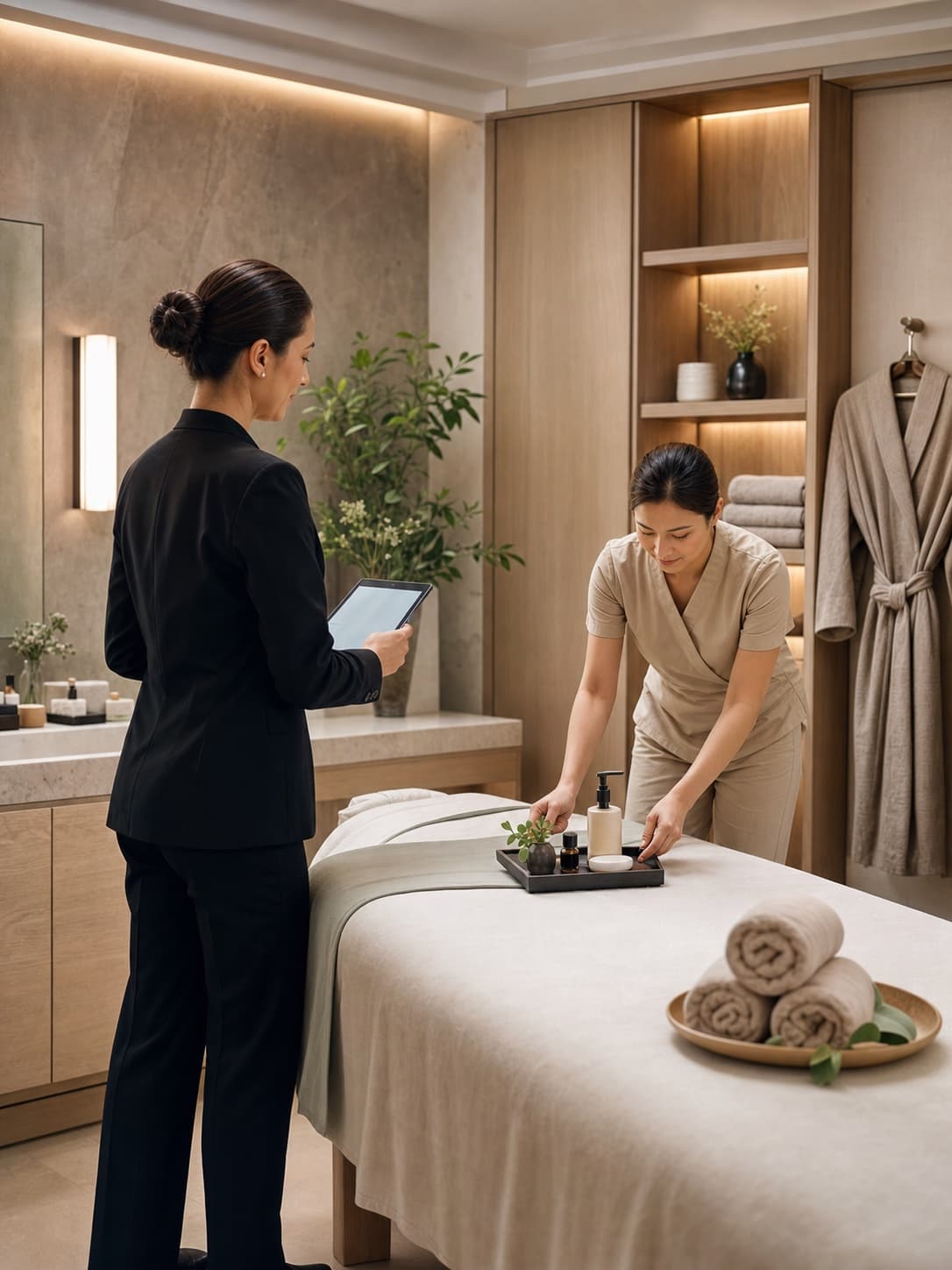
Before each treatment: temperature, lighting, music, scent, linen, face cradle, robe, slippers, trolley and waste are checked.
Consultation
Health changes, contraindications, pressure preferences and expectations are confirmed before treatment begins.
Therapist conduct
Voice, movement, draping, transitions and guest communication are controlled because proximity makes every detail visible.
Post-treatment
Belongings are confirmed, treatment record completed, product recommendation noted and room status updated.
Quality control
Daily pre-opening inspections and monthly treatment observations turn quality into coaching, not surveillance.
Pre-Treatment Preparation
Treatment quality begins before the guest arrives. A therapist who is preparing their room while the guest is waiting in reception is already behind. Pre-treatment preparation should be completed at least fifteen minutes before the scheduled appointment time, with everything in place and verified.
Treatment room setup
Linens fresh and properly dressed. Massage table height adjusted for the therapist. Oil warmers and hot stones at temperature. Ambient lighting and music set to the standard. Room temperature confirmed. Products for the specific treatment laid out and ready. Any customisation for the guest, including preferences from a previous visit or notes from the booking, reviewed before entry.
Facility check
Wet areas: pools, steam rooms, saunas, checked and at correct temperature before the first guest of the day. Towels and robes at designated points. Relaxation lounge restocked with water, fruit, and wellness teas. Any maintenance issues logged immediately and front desk notified if a facility cannot be offered.
Product and equipment check
All products verified as in date and correctly stored. Equipment: hot stone heaters, paraffin baths, electrical massage tools, checked for function. A faulty piece of equipment that is discovered during a treatment is a service failure that cannot be recovered in session.
Guest Consultation and Intake
The consultation is the operational step most commonly rushed in busy spas. It is also the one that most directly affects both service quality and guest safety. A consultation that takes three minutes because the next guest is waiting is not a consultation. It is a liability.
Health intake
Every new guest completes a health intake form before their first treatment. Repeat guests should have their form reviewed and updated at each visit. The therapist reviews the form before the consultation, not during it. Contraindications such as pregnancy, recent surgery, cardiovascular conditions, or skin sensitivities must be identified and the treatment adapted or declined accordingly.
Preference and pressure discussion
For massage treatments: confirm pressure preference, areas to focus on, areas to avoid. This is a brief, directed conversation, not a general enquiry. The therapist confirms what they heard before beginning. A guest who asked for light pressure and received medium has a legitimate complaint, regardless of how good the technique was.
Setting expectations
Explain the sequence of the treatment, approximately how long each phase will take, and what the guest should do if something is not right. This removes ambiguity and gives the guest permission to communicate during the session without feeling like they are interrupting.
Treatment Delivery Standards
Treatment delivery standards define what happens from the moment the therapist begins to the moment the guest is returned to the relaxation space. They cover technique, communication, and the physical management of the session.
Draping protocol
Proper draping at all times. Only the area being worked on is exposed. Transitions between positions are smooth and maintain coverage. This is a professional standard and a guest comfort standard. It should be non-negotiable and consistent across all therapists.
During-session communication
The therapist checks in once within the first five minutes of treatment: pressure, temperature, comfort. Then the session is quiet unless the guest initiates. Unsolicited conversation during a relaxation treatment is a standard breach in most luxury contexts.
Timing precision
A 60-minute treatment is 60 minutes of hands-on time. Set-up and consultation are not counted within that time. The guest who paid for an hour should receive an hour. Treatments that start late due to operational delays should still deliver the full duration. The therapist absorbs the operational failure, not the guest.
Post-Treatment and Guest Journey
The quality of the post-treatment experience determines what the guest carries with them. A great treatment followed by a rushed transition back to reality, bright lights, a noisy corridor, a hurried robe exchange, loses much of what the treatment created. The post-treatment sequence should extend the experience, not end it.
Recovery time
After the treatment, the guest is given time to return to awareness before being assisted from the table. They are not asked questions or given instructions immediately. A brief, quiet moment before transition is standard in a luxury context.
Post-treatment guidance
Hydration guidance, recommendations for the rest of the day, and any aftercare notes relevant to the treatment received. These should be brief, specific, and given while the guest is settling in the relaxation lounge, not as they are leaving.
Feedback and next booking
Once the guest has had time to recover, a brief, natural enquiry about their experience. Not a survey. Not a request for a review. A genuine question that creates an opportunity to address anything that was not right and to note any preferences for their next visit.
Facility Maintenance and End-of-Day Close
The spa facility must be maintained to the same standard throughout the day as at opening. A wet area that deteriorates over the course of the day, or a relaxation lounge that is not restocked between guests, creates an inconsistent experience that reflects on the property's overall standards.
Between-treatment reset
Treatment rooms must be fully reset between guests: fresh linens, waste disposed of, surface areas sanitised, products restocked, temperature and ambient settings reset. Minimum reset time is ten minutes. Scheduling must account for this. Back-to-back bookings without reset time is an operational error, not an efficiency gain.
End-of-day close
All equipment switched off and stored correctly. Wet areas drained and cleaned. Product inventory checked against par levels. Any items for laundry bagged and logged. Treatment rooms locked. A brief end-of-day report noting any maintenance issues, guest feedback, and items for the opening team.
A spa procedure does not make every treatment the same. It makes every treatment possible. The structure behind a wellness experience: the prepared room, the properly conducted consultation, the precise timing. That is what gives the therapist the conditions to do their best work. That work is human and individual. The procedures that frame it are not.