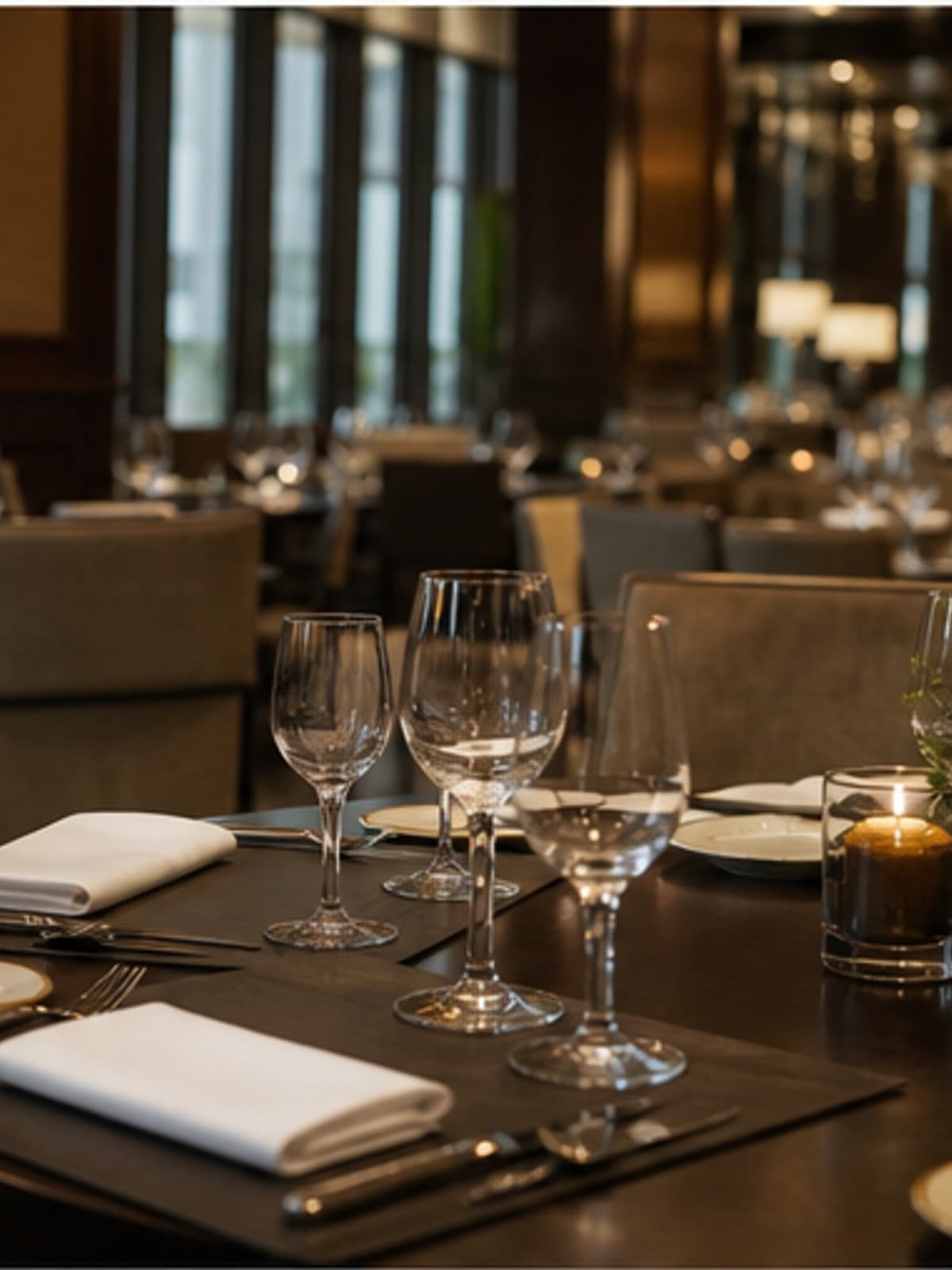
Restaurant service
A restaurant SOP should document the full service rhythm, not only the greeting and order taking. The team needs a clear sequence from briefing to mise en place, table approach, order flow, service recovery and closing handover.
A practical operating framework for hotel F&B teams: service briefing, mise en place, table standards, allergen handling, room service, closing controls and guest recovery.
Operational purpose
In a hotel, Food & Beverage is not one single operation. Breakfast, restaurant service, bar, banquets and room service all have different pressure points. A strong SOP library gives each outlet the right sequence, while keeping the same service language across the property.
The goal is simple: make the basics repeatable. Every shift should know what to prepare, what to check, what to say, when to escalate and how to close the service cleanly.
Core F&B SOP modules
What to document
The best F&B SOPs are specific enough for daily execution and simple enough for a supervisor to coach from them during service.
A restaurant SOP should document the full service rhythm, not only the greeting and order taking. The team needs a clear sequence from briefing to mise en place, table approach, order flow, service recovery and closing handover.
Breakfast needs separate procedures because volume, timing and guest expectations are different from lunch or dinner. Buffet checks, replenishment rhythm, coffee service, queue control and closing standards must be written.
The bar SOP should cover station setup, garnish preparation, glassware standards, pouring consistency, stock control, guest interaction and responsible service. It also needs clear closing and cash control steps.
Room service fails when order taking, tray setup, delivery timing and tray collection are treated separately. A useful SOP links the full flow from phone script to tray presentation and post-delivery follow-up.
F&B teams need scripts and escalation rules for wrong orders, delays, allergen issues, cold dishes, billing disputes and service complaints. The goal is not a robotic script, but a clear response path.
Allergen handling must be documented because it is both a guest experience and safety issue. The SOP should define how requests are captured, repeated, flagged, communicated to kitchen and confirmed at service.
Free operational extract
This is the type of practical logic used inside the LuxOps F&B Starter Pack and F&B Playbook.
Starter Pack
Use this when you need immediate tools: daily service checklist, opening and closing checklists, briefing template, room service checklist, allergen tracker and recovery scripts.
View Starter PackFull reference
Use this when you need the complete department reference: restaurant standards, breakfast, bar, wine service, room service, guest interaction, mise en place, team management and quality standards.
See Full PlaybookF&B guides
Guide
Pre-service controls for room setup, table inspection, briefing and final checks.
Guide
The 21-step service flow from greeting to farewell.
Guide
Order taking, tray setup, delivery timing and recovery.
Guide
Restaurant, bar, room service and banquet service standards.
Guide
A restaurant SOP flow from briefing to closing handover.
Guide
Order taking, tray setup, delivery timing and collection.
A hotel F&B SOP should include restaurant service sequence, breakfast operation, bar setup, wine and beverage standards, room service, allergen handling, guest recovery, mise en place, closing controls and manager handover rules.
Yes. A restaurant SOP can focus on dining room service. A hotel F&B SOP normally needs to cover multiple outlets and connections with reception, housekeeping, kitchen, room service, billing and guest recovery.
Yes. Independent hotels usually need practical procedures that are easy to adapt. The important point is to document the actual flow of service, not copy a generic brand manual.
Use the starter pack if you need immediate checklists, scripts and control tools. Use the full playbook if you need the complete F&B SOP reference with detailed procedures and department standards.
Start with practical checklists and scripts, then move to the full F&B Playbook when you need the complete department reference.