Hotel Room Inspection Checklist: Housekeeping Supervisor SOP and 100-Point Score
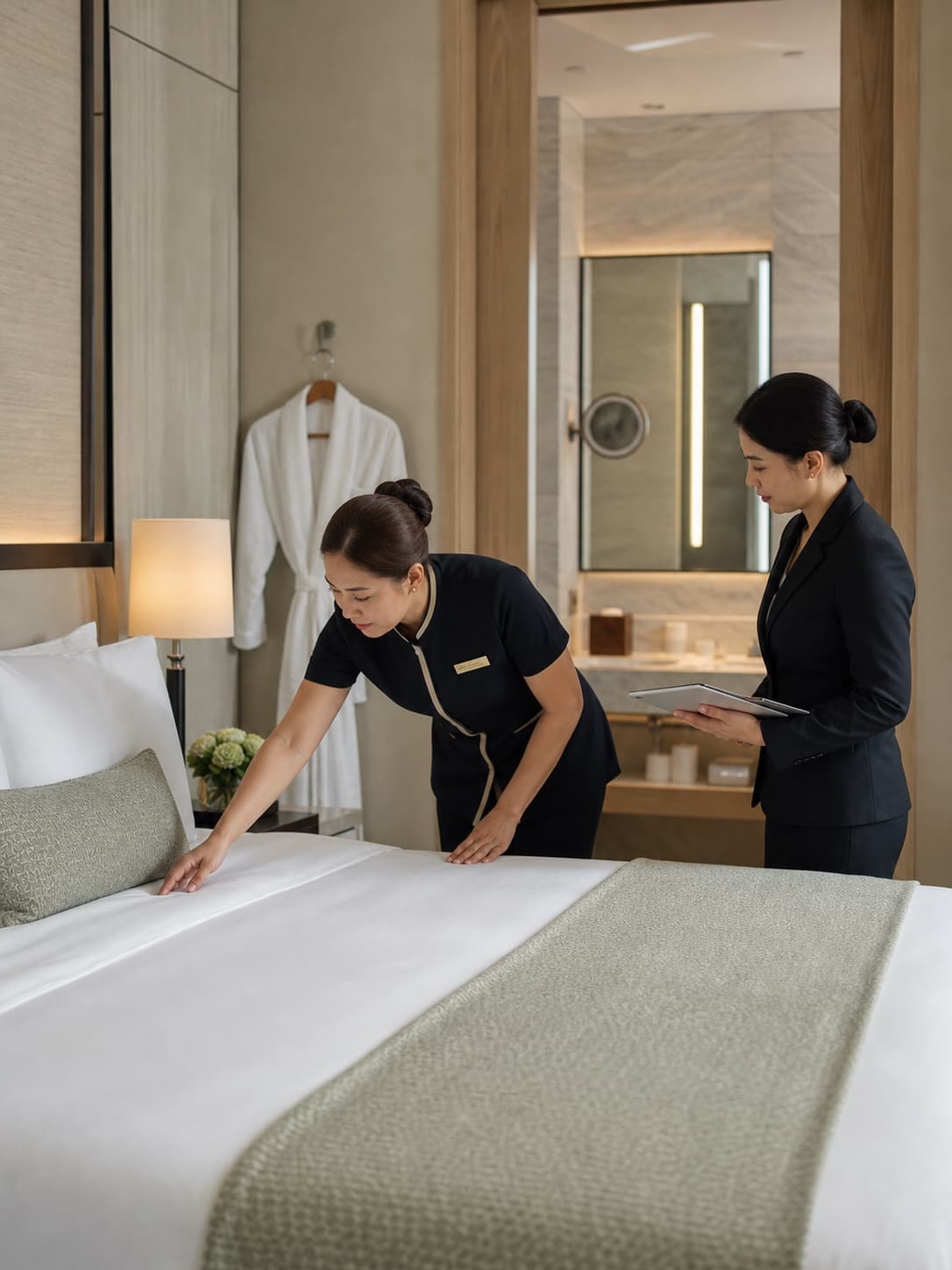
A clean room and an inspected room are not the same thing. In the LuxOps Housekeeping Playbook, a departure room is not ready for sale when the room attendant finishes cleaning it. It is only ready after a supervisor has physically inspected it, corrected any defects, and updated the PMS from Clean to Inspected. This hotel room inspection checklist is adapted from the LuxOps quality control chapter and shows the supervisor SOP: fixed inspection sequence, 100-point scoring model, bathroom and bedroom criteria, defect log and release rule for Front Desk.
Housekeeping tools
Need a practical room inspection toolkit?
Use the inspection kit for editable control sheets, or the full playbook for the complete housekeeping SOP system.
Free resource
Download a free chapter of the Housekeeping Playbook
See what structured hotel procedures look like in practice.
Free excerpt from the LuxOps Housekeeping Playbook
Departure room inspection: the LuxOps control flow
This extract is adapted from Chapter 6, Quality Control & Inspections. It shows how the playbook turns room inspection into a repeatable supervisor routine, not a subjective final look.
Self-inspection
Every room, owned by the room attendant before the room is marked Clean.
Departure inspection
100% of departure rooms, physically verified by a supervisor before release.
Stayover spot checks
20 to 30% of stayover rooms daily, prioritising newer attendants, VIPs and previous complaints.
Scoring model
100 points: Bathroom 35, Bedroom 35, Presentation 20, Maintenance 10. Pass threshold: 90.
Critical rule
A Clean room is not sellable. Only an Inspected room may be assigned by Front Office.
The Room Status Workflow: Clean Is Not Inspected
The most important rule in hotel room inspection is simple: a Clean room is not ready for assignment. Clean means the room attendant has finished the cleaning sequence. Inspected means the supervisor has verified the room against the standard and released it. Front Office should only assign rooms in Inspected status.
Dirty / vacant
Set by the system or after checkout. The room cannot be sold and must enter the housekeeping assignment flow.
Clean
Set by the room attendant after the room cleaning SOP is complete. This status tells the supervisor the room is ready for inspection, not that the room is ready for a guest.
Inspected
Set only by a supervisor or manager after physical inspection. This is the first status that should be visible to Front Office as available for assignment.
No exception rule
If a guest is waiting, the process does not change. Assigning a Clean but uninspected room transfers the quality risk from housekeeping to the guest.
Inspection Frequency and Responsibility
A useful hotel room inspection system separates self-inspection from supervisor inspection. The room attendant owns the first check. The supervisor owns the release decision. Managers own the trend review and training response.
Self-inspection: every room
Before leaving the room, the attendant should complete a final scan from the guest perspective: bed smooth, bathroom dry, no hair, no dust, no odor, amenities aligned and no lost items.
Departure inspection: 100% of departures
Every departure room should be physically inspected by a supervisor before release. This is non-negotiable in luxury and boutique hotels where the arrival room is the first major quality signal.
Stayover spot checks: 20 to 30% daily
Stayover rooms should be sampled daily, prioritising newer attendants, VIP rooms, long-stay rooms, prior guest feedback and rooms with inconsistent quality history.
Deep dive audit: weekly
A manager or executive housekeeper should run a deeper weekly audit to identify room patterns, training needs, maintenance issues and standards that are drifting over time.
Departure Room Inspection Sequence
The LuxOps inspection sequence is designed to be fast enough for daily operations and precise enough to catch the defects guests notice. A standard departure inspection should follow the same path every time.
1. Entry assessment
Stand at the doorway for a few seconds before touching anything. Check first impression, temperature, scent, light, bed presentation and overall order. This is the guest’s first view.
2. Bedroom check
Inspect bed symmetry, pillow placement, desk, nightstands, TV unit, window area, curtains, drawers, wardrobe, safe, robes, slippers, floor edges and under-bed edges.
3. Bathroom check
Inspect toilet bowl, under rim, exterior and base; sink, counter and faucet; shower or bath surfaces; drain; mirror; floor corners; towels; glasses; tissues and amenities.
4. Details and technology
Check clock, alarms, TV input, remote, lights, phone, HVAC, minibar, stationery, guest directory, Wi-Fi information and any property-specific arrival setup.
5. Final release decision
If the room passes, update PMS to Inspected. If it fails, return it with specific defects, re-inspect after correction, and record the issue for trend tracking.
Bathroom Inspection: The Highest-Risk Zone
Most housekeeping complaints come from details concentrated in the bathroom: hair, water spots, odor, residue, used amenities or a floor that looks clean from standing height but fails at the corners. Bathroom inspection needs its own standard, not just a quick visual scan.
No hair anywhere
Check the shower, tub, floor, corners, behind the toilet, around the bath mat position and near the drain. In luxury hospitality, one hair can outweigh an otherwise perfect room.
Chrome and mirror finishing
Faucets, showerheads, towel rails and mirrors must be dry-polished. Check from an angle, because streaks and water marks often disappear when viewed straight on.
Toilet and floor detail
Inspect inside bowl, under rim, seat, lid, exterior, base and floor connection. The floor must be dry, with clean corners and no residue behind the toilet.
Amenities and towels
Amenities should be complete, aligned, labels facing forward and packaging intact. Towels must be stain-free, folded consistently and positioned to the property standard.
The 100-Point Room Inspection Score
A scoring model turns room inspection from opinion into data. The LuxOps model uses 100 points so supervisors can coach on patterns instead of arguing about impressions.
Bathroom: 35 points
Toilet, shower, bath, mirror, floor, fixtures, amenities, towels, glasses and final hygiene details. Suggested pass threshold: 31 out of 35.
Bedroom: 35 points
Bed presentation, linen, surfaces, lamps, windows, wardrobe, safe, floor, stationery and guest-facing room presentation. Suggested pass threshold: 31 out of 35.
Presentation: 20 points
Temperature, scent, first impression, symmetry, alignment, ambiance and brand-specific setup details. Suggested pass threshold: 18 out of 20.
Maintenance: 10 points
Lights, HVAC, leaks, remote, phone, furniture, hinges, fixtures and any unresolved maintenance issue. Suggested pass threshold: 10 out of 10.
Defect Logging and Coaching
The goal of inspection is not to catch people out. It is to protect the guest experience and make the team better. That only works if defects are logged clearly and reviewed regularly.
What to record
Room number, attendant, inspection time, defect type, exact location, correction required, re-inspection result and any coaching given.
How to classify defects
Group defects by category: bathroom, bedroom, closet/storage, presentation and maintenance. This makes weekly trend review faster.
What patterns reveal
The same issue across multiple attendants points to training. The same issue with one attendant points to coaching. The same room failing repeatedly points to maintenance or deep-clean needs.
Weekly action
Review the top three recurring defects, refresh the standard in briefing, and verify the following week that the issue is improving.
Room inspection criteria worth tracking
A supervisor checklist should make quality measurable, not just visible.
A strong room inspection checklist does more than catch missed dust or a streaky mirror. It protects the room status workflow, gives Front Office confidence in the rooms it assigns, and gives housekeeping supervisors real coaching data. The standard is simple: every room attendant owns self-inspection, every departure room is verified before release, and every defect becomes information the team can use to improve.
Frequently Asked Questions
What is a room inspection checklist in housekeeping?
A room inspection checklist in housekeeping is a structured supervisor tool used to verify that a room meets the property's standard before it is released to Front Office. The LuxOps model separates room attendant self-inspection from supervisor release inspection and uses a 100-point structure across bathroom, bedroom, presentation and maintenance.
What does room inspection mean in housekeeping?
Room inspection in housekeeping is the structured quality gate between Clean and Inspected room status. A room attendant marks the room Clean after service; the supervisor inspects it physically and only then updates it to Inspected so Front Office can assign it to a guest.
What should a housekeeping supervisor check during a room inspection?
The supervisor should check the room in a fixed sequence: entry impression, bedroom, bathroom, technology, amenities, wardrobe, minibar, floor and final doorway view. High-risk points include hair in the bathroom, water spots on chrome, uneven bed presentation, missing amenities, dust on lamps or skirting, and unreported maintenance faults.
How often should a hotel room be inspected by a supervisor?
In the LuxOps Housekeeping Playbook, 100% of departure rooms should be inspected before release. Stayover rooms should be spot-checked at 20 to 30% per day, with priority for newer attendants, VIP rooms, long-stay guests and rooms connected to previous complaints.
What is the difference between a room attendant check and a supervisor inspection?
A room attendant check is self-inspection before marking the room Clean. A supervisor inspection is an independent release check before the room becomes Inspected and assignable. The attendant owns the work; the supervisor owns the release decision.